julio 31, 2008

Going Riot

It is not hard to figure out that poor people are the ones that generate cities. They are the one that sprawl or concentrate in certain areas. This ‘poor people’ term includes also the middle classes because in many countries, especially in developing ones, they are struggling to hold on in their socio-economical status.

In history these poor have had the opportunity to protest or celebrate the powers –generally political– that govern and rule the city life. That’s when riots started. A riot is a public act of protest linked directly to cities for two reasons: 1. because they are the centers where authorities and multinational headquarters; 2. because people are concentrated in them.

However we can say that history and urban structure have influenced popular movements. Nowadays it is more common to hear about demonstrations or pacific riots, instead of the classic violent riots –but still easy to switch from the first to the latter in developing countries.

Inspired ‘primarily’ by military factors cities were changed after the 19th century to diminish riot potential.

The district size was smaller, creating separate communities within the same city. And when each one of these grew then it turned too large to act as a unit. The invented names to unite these communities (conurbation, greater city x) have not worked because they are artificial administrative terms.

The increase of operative segregation within the cities is also a factor, creating industrial, commercial, government districts isolated from each other and somehow from residential areas; and within residential areas the geographical segregation of classes.

Private housing developments –creating new suburbs for the middle class– and the increase of automobiles have disintegrated the traditional centers as riot places. The tendency to allocate major urban services (markets, bus terminals, etc) to the outskirts disintegrates it more.

Nevertheless contemporary cities –developed or underdeveloped– have a different setting. Motor transportation, private or public, has been a weapon for insurrectionary movements. Demonstrations using automobiles is one example (i.e. for traffic jams, or light and horns flashing). Public transport is used to mobilize people from their settlements to the riot place. In a contrary way, some countries have experienced how easily ground public transport (buses) can be taken or stopped and immediately affect the normal city flow. Another important feature is the increased number of buildings –headquarter’s offices– to riot against.

It is important to state that most of contemporary western riots are related to the political context –civil wars included. However, in many cases even when popular quarters protest and generate a fear effect in other citizens they don’t look like a serious threat to existing political structures, which have included in their countering methods systematic deployments for troop deployment, development of police forces and the already mentioned rebuilding or reshaping the city.

Based on colonial history and European revolutions the features of an ideal city for rioting would be: 1. densely populated; 2. not physically extensive; 3. relatively socially or racially homogeneous; 4. central institutions are geographically centralized and the city flows all around this center; 5. operational segregation can occur but not creating isolated compounds; 6. authorities live close to the center in known areas.

Nonetheless the effectiveness of demonstrations or riots depends on three aspects of urban structure: how easily poor can move themselves, how vulnerable the centers of authorities are to them, and how easily they can be put down. And these circumstances will vary from country to country, from city to city.

-
Reference:
Cities and Insurrections” by Eric J. Hobsbawm, published in Global Urban Development Volume 1, Issue 1, May 2005

julio 17, 2008

Social life in a Parkless City

When a city grows housing, working/commercial and leisure areas are usually a common feature. These features interrelate and people use, change and destroy/renew them while their life goes on. This condition links cities to matter conservation theory.

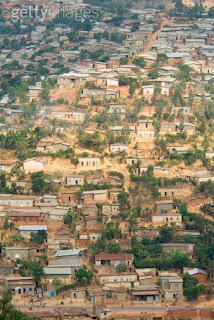
However, some settlements –the almost rural ones– evolve so fast into cities that the concept of leisure gets lost in translation. This is the case of Kigali. Somehow after the war it has grown into a large hills-spread city without a park.

In spite of this Kigali is still a green city. The hills’ trees are not cut down to zero.
Generally it is assumed that parks are the primary center of leisure for cities and towns, but here is different.

So what is the social life in Kigali?

People just seat on the big roundabouts during the night. People go to church on sunday. People walk the nameless streets. People go have a cool beer near their home. Couples marry on Saturday.
.

julio 02, 2008

Visitando una Torre di Babel: un’esperienza in Questura

Ci sono momenti quando uno si può sentire troppo estraneo, come quando si visita il China Town di NY. Nonostante possa essere quell’esperienza, andare all’Ufficio Immigrazione della Questura in Italia è far turismo negli inferi del mondo.

La mia esperienza recente mi mostra che fare una coda ha un significato diverso in ogni parte dal mondo, non solo per ragioni ethniche ma anche per i comportamenti svolti. Oggi ho capito che i Latinoamericani vogliono un po’ di spazio; i Cinesi non lo rispettano, spingono e fiatano al collo anche quando la coda non si muove; i Russi si raggruppano e parlano fin che sia mezzanotte; gli uomini provano ad andare avanti senza farla; le donne provano a mantenere l’ordine –in generale è così.

Sebbene è una situazione d’ogni giorno, la Polizia non impara che una divisione semplice farebbe una gran differenza allo scopo di mettere ordine. Pare che alla fine non è il suo obbietivo. Comunque continuano a gridare: Non Spingete!

Relaxed Síntesis de un viaje a Helsinki

Del Caribe a los países nórdicos la diferencia no es sólo el color de piel. El cielo veraniego no se oscurece a pesar de que las horas pasan. Es como si el cielo viviera en una sobredosis diaria de Red Bull.

Bajo ese cielo azul de veinticuatro horas existe un entramado urbano acogedor lleno de piezas humanas que se mueven bajo las reglas de la puntualidad. Es “diferente” ver como la gente se incomoda por un retado de dos minutos en el servicio de transporte público. Para ellos existe una gran diferencia entre quince y veinte minutos.


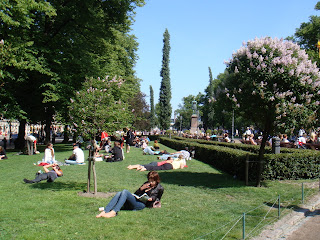
Helsinki no es comparable a las ciudades italianas en cuanto a monumentos. La Iglesia Luterana es un edificio neoclásico sin mucho que agregar. La Iglesia cavada en la piedra tampoco es una obra magistral de arquitectura (aunque sí es acogedora). El área del mercado, con el Esplanade Park, el puerto, el edificio blanco azúcar de Alvar Aalto y el Palacio Presidencia ganan un vistazo repetido porque están a dos pasos del centro.

En el Open Air Museum hay una buena colección de viviendas de madera y demás objetos relativos a la historia y geografía suomi. El castillo de Suomenlinna es parte del juego de la lista patrimonial UNESCO; sin embargo el paisaje es simpático al gusto.

Helsinki está llena de bares. Parece que en cada esquina se da la oportunidad de beber. Algunos lugares son famosos por las ofertas de happy tour y por las terrazas a cielo abierto. El karaoke es una pasión finlandesa que incluí en mi registro de “hecho”.

Helsinki, en fin, tiene vida. Entre el sinnúmero de actividades y la cercanía de las cosas es fácil enamorarse de ella si se puede habitar.
Cuando menos lo creía –mientras íbamos de camino a celebrar el Juhannus– me di cuenta que estaba en el segundo paraíso: luego de una hora y media en auto, un paisaje lagunar majestuoso que se contrapone perfectamente en belleza al paraíso llamado Santo Domingo. Al quasi-amanecer, después de una hora remando solitario en un lago, imaginé que venían del cielo a tomarme para siempre.
De regreso en Helsinki disfruté de nuevo caminar y recaminar por el área del mercado, pasar mil veces frente a la blanca Iglesia Luterana, explorar la vida nocturna y esperar el tren bajo el cielo azul de la noche… Una experiencia inolvidable.

Otras notas:
-Mucha gente tiene nombres comunes con dos letras (Liisa, Saara, Veera, Niina, Tuuli) y hace que uno parezca retrasado al repetirlos.
-Hablan finlandés, sueco e inglés. A pesar de hablar su lengua, al interrumpirles en inglés nunca piden que se les repita lo dicho.
-La seguridad de las calles se siente en todos lados.
-Defienden a Santa Claus como algo de su propiedad; no aceptan que se le vincule siquiera con el Polo Norte o Cánada. Santa Claus no usa Facebook (yo tampoco).
-Por favor, quitarse los zapatos antes de entrar a la casa.