septiembre 29, 2008

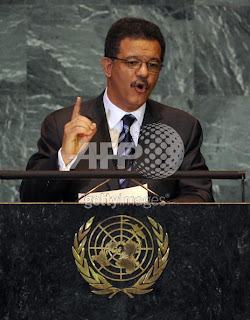
One island and the paradox of two very different speeches

Sometimes when people ask me about the difference between DR and Haiti I explain with a basic description like: they don’t have anything and we have a lot.

In terms of world indexes DR is ahead of Haiti in all sectors, but still gets affected by similar obstacles: natural risks and disasters, oil price fluctuation, drugs…

Meanwhile the latest session of the United Nations (63rd Assembly) revealed structural differences in the approach of both governments regarding development.

Leonel Fernández (LF), the DR President, started his speech stating the lack of commitment of the rich countries to the funds they promised to provide to developing countries. He talked in general of developing countries and gave some small details about DR status.

René Preval (RP) from Haiti instead spoke only about his country and referred the rich’s commitment in a very different perspective, a deeper one that concerned the use of the current funds on development and the war on drugs.

LF speech seemed desperate on getting aid while RP argued about rightful investment. Two dissertations that one could imagine could have been done the other way around given that DR and Haiti have almost paradoxically the opposite situation despite the fact that they share the same island. A tricky issue that leads to new thoughts on the way DR has to play the international aid game and still be a propitious place for foreign investment –as it is (or seems to be) one of the priorities of the current government.

Photo credits TIMOTHY A. CLARY/AFP/Getty Images

septiembre 24, 2008

Rwanda y el turismo de no-otra-opción

Poco hay que ver en Rwanda, pero para un país con pocas opciones de ingreso el turismo ha sido usado de forma inteligente.

Este ejemplo viene después de escuchar teorías sobre turismo de calidad vs turismo de masa, turismo de alto beneficio y turismo contaminante...

Después de estos meses he visto las pocas opciones que tengo para visitar en este país. Fui al Akagera National Park en búsqueda de los animales salvajes que aparecen en NatGeo y Animal Planet. Algunos de ellos los vi, otros no. No obstante el pago de la entrada hay que hacerlo igual. Por dos días y una noche en una casa de campaña lo gastado asciende casi a 300 dólares gringos, de los que 125 corresponden al derecho de entrada y uso de los camping sites. El resto va para el transporte, alquiler de la tienda y comida.

En resumen, 300 dólares para tratar de ver estos animales salvajes –que pueden o no estar a la vista. Yo no pude ver ni zebras ni elefantes.

Conozco personas que han ido tres veces y no han visto los elefantes, y conozco otras que han ido una vez y los han visto. Cosas de la vida!

Pero lo interesante es lo que sigue: Cuáles son las demás opciones en Rwanda fuera del Memorial del Genocidio en Kigali?

  1. Tour para ver los Silverback Gorillas, 600 dólares gringos.
  2. Recorrido para la zona del volcán, con la opción de entrar en los senderos que llevan a ver otros tipos de simios. Para cada uno de estos 4 o 5 senderos es necesario pagar precios que van desde 80 hasta 150 dólares gringos.
  3. La zona del lago en Kibuye.
  4. La zona del lago en Gisenyi.
  5. El área forestal protegida camino a Cyangugu.
  6. Un viaje de 2 horas a Nyanza a ver el antiguo Palacio del Rey.

En las últimas tres el gasto dependerá del alojamiento y gastos en comida y transporte. Para las primeras dos el gasto es bastante elevado.

Pero es así... El que viene a Rwanda, sea rico o mochilero, para disfrutar de estos placeres debe estar dispuesto a gastar o mejor sale a otro país al próximo día. Es un turismo que obliga casi a la fuerza.

Inteligente? Sí, porque los Silverbacks sólo están disponibles aquí. El que viene no sabe qué esperar y termina gastando.

Crea voluntad de regresar? No, pero el alto precio pagado al inicio es considerado suficiente para crear el balance contra el bajo repetition-rate.

Una decisión importante para un país de pocas opciones.


Foto tomada de:

http://msnbcmedia1.msn.com/j/msnbc/Components/Photos/060219/060219_CinGorilla_vmed.widec.jpg

septiembre 10, 2008

Empoderamiento y mundo extralegal en RD. Una carrera de obstáculos.

Al mezclar la información del “Informe sobre el Desarrollo Humano 2008”, elaborado por el PNUD en República Dominicana y la “Evaluación preliminar de la economía extralegal en 12 países de Latinoamérica y el Caribe: República Dominicana”, elaborado por Instituto Libertad y Democracia en el 2006, podemos darnos cuenta del problema:

Es sumamente difícil lograr un verdadero empoderamiento cuando:

· El 85% de los terrenos urbanos son poseídos extralegalmente.
· El 56% de la superficie rural es poseída extralegalmente.
· El 99% de las empresas operan extralegalmente.


Cada una de estas fallas legales acarrea una lista de problemas que afectan al sistema gubernamental pero que no frenan que esta economía “informal” continúe generando tres veces más dinero que la inversión extranjera que se recibe.

Una gran parte del problema social lo representa la ilegalidad en la propiedad de terrenos. Un cambio en la propiedad de terrenos, con tal volumen de dinero involucrado, generaría más ingresos de lo que cualquier gobierno cuenta en su presupuesto.

Los 6 efectos fundamentales de la propiedad son:

·Fijar el potencial de los activos poniéndolos por escrito en títulos, contratos u otros documentos.
·Integrar información dispersa por los títulos extralegales, dando seguridad y confianza a futuros inversores.
·Hacer fungibles a los activos, permitiendo un intercambio rápido dentro de un marco seguro.
·Hacer responsables a las personas a través de derechos directos bajo el marco de la ley.
·Poner a las personas en red mediante las nuevas oportunidades generadas, permitiendo la organización e integración de sociedades y empresas.
·Proteger las transacciones a través de un registro claro que asegura tanto al vendedor como al comprador.


Referencias tomadas de:

1. Evaluación preliminar de la economía extralegal en 12 países de Latinoamérica y el Caribe: República Dominicana
http://ild.org.pe/files/pdf/executive_report_dominican_republic.pdf

2. Informe sobre el Desarrollo Humano 2008: República Dominicana
http://www.pnud.org.do/sites/pnud.onu.org.do/files/INDH_2008.pdf

The role of participation processes in public sector initiatives

Why is that almost every international organization is supporting participative processes for development? The answer usually refers empowerment and transparency.

Regarding to empowerment there are very relevant reasons. In my opinion, since it takes such a long time to develop and implement a proper participation, we need to have clear that it makes programs' implementation less bureaucratic.

When people are involved they can take actions according to their perspectives. Ok, this can imply that they could even take actions outside legal boundaries, but these actions would be inside of the social boundaries.

These actions, inside or outside the boundaries, are efficient as they respond to necessities according to a plan –partners-made or not. In a broader sense, when this kind of process start it generates a chain-reaction that empowers people in other areas and not only the initial one.

That’s why there should be a constant dialogue between the partners (be they public sector, community-based organizations, etc.) Therefore customary Institutions need to strengthen their capabilities to put into practice the approach suitably at different levels.
-

septiembre 05, 2008

The two approaches

During my quest in Rwanda I’ve directly learned that development aid is not as naïve as I thought. Governance, community participation and scale-up processes are not the only ones considered, and are sometimes classified as evil. It’s a difference linked to market laws and decision-makers’ choices.

In the Child-Friendly Schools developing in Africa there are basically two approaches:

· Direct contracts signed directly between UNICEF and the developer.

· De-centralized contracts in which UNICEF monitors how money flows between all the other counterparts involved (government and contractor).

These two approaches are very different. There are many different arrangements under the second one, according to the country and the government’s involvement.

The first one is an ‘aggressive’ option. These contracts allow the use of penalties in a very fast and effective way. This means that the pressure goes directly from top to bottom, without linkage with the surrounding condition. It’s a simple independent process.

The second option is a ‘passive’ one. The inter-linkage serves mostly to develop a system, procedures and order. The more and bigger the counterparts are, more difficult is to push, therefore results could be delayed. It’s an intricate process.

Which one to choose?
In Rwanda the chosen approach is the second one. Laws and agreements fix this condition, and I think it’s the best one. Even if there are some delays the construction is taking place. The institutional framework is set up and heads are interested in the process.

Meanwhile, other countries choose the ‘aggressive’ approach in search of faster results. It’s a good idea in emergency or in highly unstable contexts, but it’s clear that human & urban development is a long-term process that can be considered a never-ending story.

If we think clearly, the best option to support this expected development is the ‘passive’ one. Nevertheless follow up and pulling the whole-chain is the only way to achieve results.
-