febrero 27, 2010

Concepto de escala

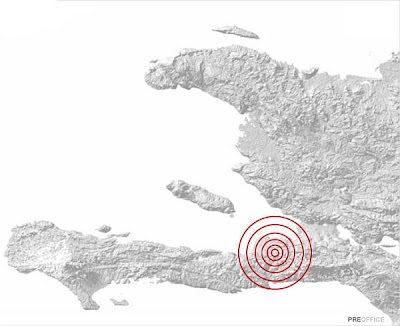
... Una persona mira el mapa y sólo de mirarlo se cansa. Y, no obstante, parece que todo está cerca, por decirlo de alguna manera, al alcance de la mano, la explicación, evidentemente, se encuentra en la escala. Es fácil de aceptar que un centímetro en el mapa equivalga a veinte kilómetros en la realidad, pero lo que no solemos pensar es que nosotros mismos sufrimos en la operación una reducción dimensional equivalente, por eso, siendo ya tan mínima cosa en el mundo, lo somos infinitamente menos en los mapas. Sería interesante saber, por ejemplo, cuánto mediría un pie humano en esa misma escala. O la pata de un elefante. O la comitiva toda del archiduque maximiliano de austria.

febrero 26, 2010

Parachuting Aid to Haiti

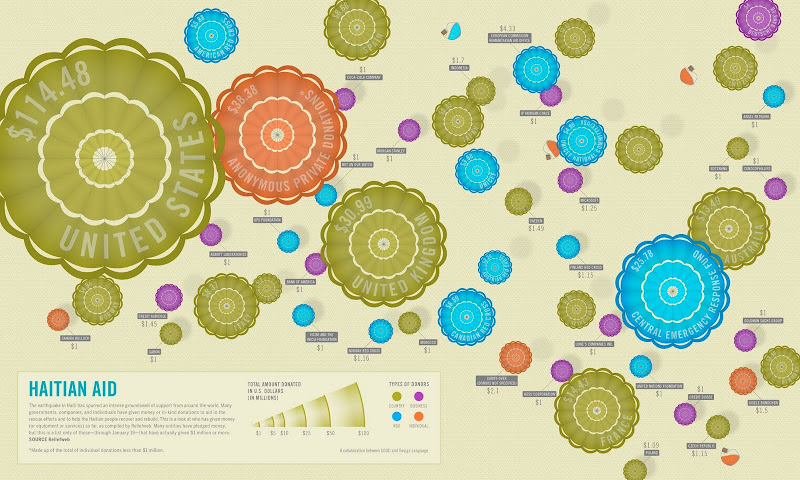
Since the January apocalypse, aid has been falling in Haiti as burning meteorites, or simply marines’ parachutes. At Good.is just found this infographic that displays the air-borne spectacle.

Haitians set up tent city for shelter, United Nations Photo

It does not show the areas of aid per donor, but hopefully the magic aid-shower will be stronger than the forthcoming hurricanes.

febrero 20, 2010

Health Clinic for Haiti by Kristen Smith

HEALTH CLINIC IN USE

What are Haiti’s most pressing health challenges? Immediately following the quake, trauma injuries were the most urgent medical concern, but the focus now is on follow-up of patients who have had surgery as well as basic primary healthcare services, including services for maternal-child health and chronic diseases including diabetes, heart disease, HIV, and tuberculosis, among others.
(Pan-American Health Organization, 19 Feb 2010)

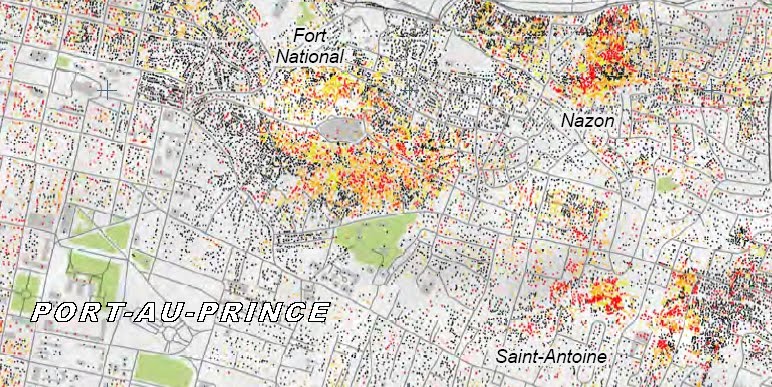
The intention of this project by architect Kristen Smith is to construct a series of permanent structures throughout the massively damaged areas near Port-au-Prince, so that all inhabitants are at a walkable distance away from a clinic site [1/3 mile].
The mobile health clinic is composed of three pods that contain the necessary medicines and supplies; these pods along with the medical staff travel between the clinic sites. When the mobile clinic is not at a site, then the local community can use the shaded space. This space along with the refrigerator can be used for outdoor markets, community gatherings, educational groups, women’s support groups, and movie screenings.

HEALTH CLINIC - ALTERNATIVE USE

It is designed to be lightweight and open. The program and structure are focused on a 4’ wide core, which minimizes self-built foundations. The permanent structure includes a large amorphous photovoltaic array supported by steel columns, a solar refrigerator, and a storage/mechanical room. This structure is built of materials from disassembled shipping containers.
The solar panels provide shading for the site, which is crucial in this hot climate. Sunlight is a natural disinfectant; a limited amount of beneficial sunlight enters the project through the 4” spacing between photovoltaic panels. The generated electricity powers the refrigerator, and excess electricity can be used by the local community.

HEALTH CLINIC DISTRIBUTION IN CITE SOLEIL; HAITI

febrero 17, 2010

Container / Shelter for Haiti by Kristen Smith

"The two biggest problems are shelter and sanitation. It’s urgent that we get people with reasonable waterproof shelter over their heads, " U.N. disaster chief John Holmes said.

The goal of this project by architect Kristen Smith is to design a disaster relief shelter that can be assembled within 48 hours. The shelter responds to the immediate needs of the people, and also be a core for permanent housing. The idea of the container/shelter is that a shipping container holding relief items is designed to become a home.
The 500 or so improvised tent camps that have sprung up across the city - some of them on precarious sites on the sides of ravines - may be here for years to come, turning into slums in a city that was already poor, run down and ringed with shantytowns. U.N. disaster chief John Holmes said.

"Please send us a tent" asked Senita Mazile, a 43-year-old living in the same camp as Vital with her three children. All her neighbours said the same.

The items needed for relief are being shipped in large shipping containers. The premise of this project is that a container will then itself become a shelter after the goods are unloaded.
"My husband and I had to sit through the rain on buckets with two children each on our laps." said Jeanne Vital, 30, camped out in the town square park in Petionville, a suburb of Port-au-Prince.

The container/shelter employs the economical and readily available materials and technology used to make standard shipping containers. Inexpensive sheet metal composes the panels and the majority of the structure, and the connections are made with mass-produced hardware and standard bolts and screws. Low-tech building construction allows for a quick assembly.

febrero 16, 2010

in Haiti: vacancies!


click <- Infrastructure and rehabilitation vacancies
click <- Shelter and non-food items vacancies
in Haiti

febrero 15, 2010

Europa no recibe

...
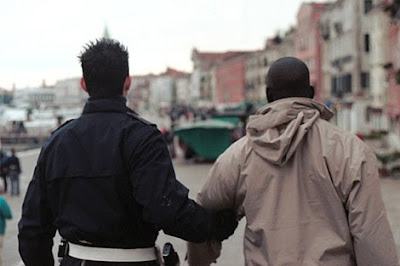
Pero esa Europa que nunca supo de puntos y de comas, que ha marcado su acento en todos los idiomas, la pertinaz viajera, la que avistó los polos y coronó las cumbres y anda a vueltas, también, por el espacio… esa Europa, hoy no recibe, hoy no quiere inmigrantes, hoy no quiere que nadie la perturbe y por ello reitera la vieja cantaleta: más muros, más candados, más rejas.

Fragmento de Europa no recibe por Koldo Campos S.
Photo by: JAZ

febrero 10, 2010

Haiti: Spontaneous Architecture Competition


In the wake of the Port-au-Prince earthquake, Haitians have sustained an immense loss of life, with numbers still climbing, and the collapse of physical structures signifying the collapse of the governmental, social, economic, and infrastructural institutions those structures housed and represented. This earthquake was no typical disaster.

The relief effort of this particular disaster goes beyond air-dropping supplies and building emergency housing.
People talk about emergency shelter. What about emergency institutions, only one of which is housing?

Participants in February's Spontaneous Architecture competition are invited to take this question seriously.
Responses can be strategic, organizational, institutional, and/or architectural.

Submissions are single images, formatted in 8.5 inches by 11 inches (landscape), 300dpi tiffs. Images must be anonymous, containing no identication of their creators. Submissions may (but are not required to) include up to 100 words of text. All submissions are due by 11:59PM on 15 February 2010.


febrero 09, 2010

Debajo del verde follaje, aprender a leer


Aprender a leer es una de las vías de salida adelante en este intrincado mundo en el que vivimos. Es por eso que leer está entre los objetivos del milenio. Es por eso que la lectura, como paso previo al dominio de un tema, sirve para empoderar mujeres y niños –también incluidos en los objetivos milenarios y definidos partícipes activos del cambio.

Un día del pasado diciembre tuve la oportunidad de visitar una serie de cooperativas que apoyan el desarrollo rural. Mujeres, hombres y jóvenes (machos y hembras) trabajaban en agricultura, sastrería, elaboración tradicional de artículos decorativos… actividades simples que, si bien no les ayudarán a salir del profundo hoyo, les ocupan las mentes, les agrupa, les hace sentir parte de un sistema, con derechos y deberes.

Uno de esos derechos es el de saber leer.

Por eso la junta de cooperativas y el interés de los cooperantes han hecho de un árbol frondoso y de la curva natural del suelo, la cobija perfecta para enseñar la transición de grafías a sonidos.

Antes había visto esperanzadoramente aulas “virtuales” bajo árboles y/o bajo aire, con niños pequeños uniformados –una imagen que era de esperarse en viajes anteriores. Esta vez, la sensación de ver los adultos así (padres de tal vez 5, 6 o 7 hijos) me llenó agradablemente de esperanza la copa de la vida.